

Yo, what's up everyone! I'm a supplier in the cab business, and today I wanna chat about whether "cab" can be used in a scientific context. It might seem like a pretty random topic at first, but stick with me, and I'll show you there's more to it than meets the eye.
First off, let's get the basic understanding of what a "cab" usually means. In our day - to - day life, when we say "cab", most of us are thinking about a taxi. You know, those cars that pick you up and take you to where you need to go. But as a cab supplier, I deal with a different kind of cab. I'm talking about the cabs on heavy - duty vehicles like trucks and construction equipment. These cabs are the enclosed spaces where the operators sit and control the machinery.
Now, can this kind of "cab" fit into a scientific context? Absolutely! When it comes to engineering and design, there's a whole lot of science involved in creating a functional and safe cab.
Let's start with the materials used. Scientists and engineers have to carefully select the right materials for cab construction. For example, they need to consider the strength - to - weight ratio. They want a cab that's strong enough to protect the operator in case of an accident but not so heavy that it adds unnecessary weight to the vehicle, which could affect fuel efficiency. High - strength steel is often a popular choice. It has excellent mechanical properties, and through scientific testing and analysis, engineers can determine the optimal thickness and shape of the steel components to ensure maximum safety and performance.

Another area where science plays a huge role is in the ergonomics of the cab. Ergonomics is the science of designing and arranging things so that people can use them most efficiently and safely. In a cab, this means making sure the controls are within easy reach of the operator, the seat is comfortable for long - term use, and the visibility from the cab is good. Scientists study human body dimensions, movement patterns, and visual perception to design cabs that reduce operator fatigue and increase productivity.
For instance, the placement of the steering wheel, pedals, and dashboard controls is not just a matter of random choice. It's based on scientific research about how the human body naturally moves and reacts. If the controls are too far away or in an awkward position, the operator might have to strain to reach them, which can lead to fatigue and even accidents over time.
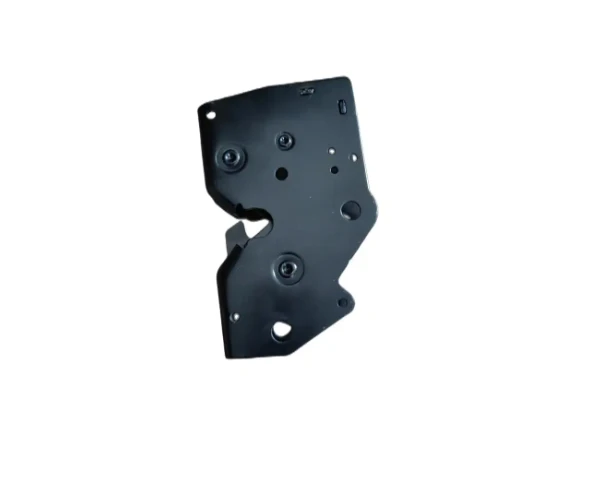
Now, let's talk about some of the products we offer as a cab supplier. We have a wide range of parts for different types of cabs, especially those for DAF vehicles. Take the Daf 0962638 1308764 Hook Bracket. This hook bracket is an important component in the cab. From a scientific perspective, its design has to take into account the forces it will be subjected to. Engineers use equations of mechanics to calculate the stress and strain on the bracket when it's in use. This helps them determine the right material and manufacturing process to ensure the bracket can withstand the load without failing.
The Daf Door Check 1400734 is another great example. This part controls the opening and closing of the cab door. Scientists need to understand the principles of friction and kinematics to design a door check that works smoothly and reliably. If the door check is too loose, the door might slam shut unexpectedly, and if it's too tight, it could be difficult for the operator to open and close the door. Through scientific experimentation and testing, we can find the optimal settings for the door check.
And then there's the Daf 1427612 1427610 Hydraulic Lock. Hydraulics is a branch of science that deals with the mechanical properties of liquids. In the case of this hydraulic lock, scientists use the principles of fluid pressure to design a system that can securely lock certain parts of the cab. The hydraulic fluid is used to transmit force, and by carefully controlling the pressure and flow of the fluid, the lock can operate effectively.
In addition to the mechanical aspects, there's also the matter of environmental science when it comes to cabs. Cabs need to be designed to protect the operator from external factors such as noise, dust, and extreme temperatures. For noise reduction, scientists study the principles of acoustics. They use materials with good sound - absorbing properties and design the cab's structure in a way that minimizes the transmission of sound waves.
When it comes to protecting against dust and other contaminants, air filtration systems are installed in the cab. These systems are based on the principles of fluid dynamics and particle filtration. Scientists have to design filters that can effectively trap dust and other small particles while still allowing a sufficient amount of air to flow into the cab for ventilation.
In terms of temperature control, thermodynamics comes into play. Cabs are equipped with heating and cooling systems. Scientists use the laws of thermodynamics to design these systems so that they can maintain a comfortable temperature inside the cab, regardless of the external weather conditions.
So, as you can see, the concept of a "cab" is deeply intertwined with science in many different ways. Whether it's the materials used, the ergonomics, the mechanical components, or the environmental protection features, science is at the heart of cab design and manufacturing.
If you're in the market for high - quality cab parts, whether it's for DAF or other makes of vehicles, we're here to help. We have a team of experts who understand the scientific principles behind these parts and can ensure that you get the right products for your needs. Whether you're a vehicle owner looking to replace a worn - out part or a manufacturer in need of reliable components for your new cabs, we're the supplier you can trust. Reach out to us for a chat about your requirements, and let's work together to find the best solutions for your cab needs.
References:
- Engineering Mechanics textbooks for understanding forces, stress, and strain in cab components.
- Ergonomics research papers for cab design and operator comfort.
- Acoustics, fluid dynamics, and thermodynamics books for environmental protection features in cabs.


