


Engine
Mide-Diesel Technology & Parts
Mide-diesel is one of the leading exporters of heavy duty truck spare parts in China, which is professionally in manufacturing and selling Europe truck parts.Our products are distributed to 52 countries/regions, which are acknowedged by customers with "Quality Parts with Professional Service at Competitive Prices."we have our own production and product developement .we stock 10000+ individual SKU so that we could offer fast shipping.
Why Choose Us
Best Value For Money
We understand that vehicles are a significant investment and that you wish to spend your hard-earned money on something that can serve you for decades. All our trucks undergo servicing in top-notch service centres before the sale to ensure that they are in top condition.
Wide Range Of Vehicle Selection
Thanks to our vast array of options, you can browse trucks using filters such as wheel formula, price, type of vehicle, cabin, mileage and date of registration. These preferences will enable you to get the truck that best fits your requirements within a short period.
After Sales Support
We deliver to the closest port to you, and our sales managers can give you an estimate of how much it would cost. Be sure to take benefit of our extra services such as visual customisation before stepping out of our yard. We look forward to seeing you soon.
Founded in 2009 Over a decade of experience in the truck parts industry.We have established long-term relationships with many well-known brands.
Our certified products are competitively priced to meet customer needs and can be customized to meet your expectations.


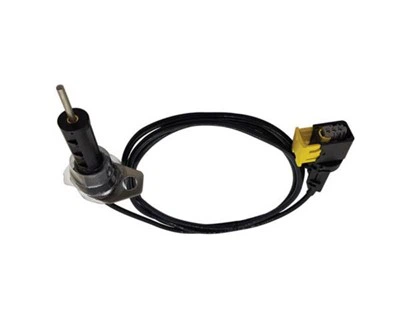


The Renault engine is the heart of your vehicle. It’s a complex machine built to convert the heat from burning gas into the power that turns the road wheels. The chain of reactions that achieves this goal is set in motion by a spark that ignites a mixture of fuel and compressed air in a momentarily sealed cylinder and burns rapidly.
An Renault engine is a machine that burns fuel and converts it into mechanical power. Most modern vehicles use internal combustion Renault engines (ICE) that ignite the fuel and use the reaction to move mechanical parts. Renault Engines – such as those used to power vehicles – can run on a variety of different fuels, particularly gasoline, and diesel in cars.
Benefits of Renault Engine
More economical
Lower fuel consumption speed covers the entire working speed range, fuel consumption per 100 kilometers is 1-2L lower than competing products, and optional 100,000 kilometers long oil change interval, economical and worry-free.
More reliable
Adhering to the reliable and durable design concept, the structural design of key components such as the body, cylinder head, and crankshaft is synchronized with the latest European concepts. The B10 life span reaches 1.8 million kilometers, high attendance and high profitability.
Comfort
The whole vehicle is customized development, low vibration, and more power. Adopt cone muffler ring to suppress the high frequency noise of supercharger and pre-spray noise reduction technology, low noise.
Lightweight
The whole machine is lightweight and modular in design. Significantly reduce the weight of the whole machine and reduce the number of peripheral parts.
Types of Renault Engine
There are many types of engines on various bases, all are discussed in detail below.
Rotary Engine
The cylinders move around a fixed crankshaft in a rotary engine rather than vice versa. This is to say that the crankshaft moves instead of the cylinders. The motion of the shaft is converted by pistons into a rotary motion at the ends of the cylinders so that the whole assembly rotates about an axis.
Turbo Engine
The turbocharger consists of a turbine and a compressor driven by exhaust gases from the engine. The exhaust gases leave the cylinder through an exhaust valve and pass into a hollow turbine wheel, which causes the compressor to compress air from the atmospheric intake into another concave turbine wheel, which drives the other compressor wheel.
Reciprocating Engine
A reciprocating engine (also known as a piston engine) is an internal combustion engine (ICE) in which the piston completes a reciprocating motion. It is the most common type of engine and can be found in virtually all motor vehicles (cars, trucks, motorcycles, buses, boats, tractors, and so on).
The internal combustion engine works by burning fuel (like gasoline) inside the machine to create the force that pushes a piston back and forth. This action then causes wheels or propellers to spin. The modern internal combustion Renault engine uses a controlled fuel explosion to push a piston inside a cylinder. The piston is connected to the Renault engine’s crankshaft via a connecting rod, and as the piston moves up and down, it rotates the crankshaft. This turns the wheels and drives the car along.
A typical two-stroke Renault engine has three valves per cylinder: two intake valves (one for each cylinder) and one exhaust valve. Two lobes open the intake valves on an eccentric shaft, which is turned by a gear train driven by the crankshaft. The exhaust valve is opened by a lobe on another shaft, driven by gears from the crankshaft, which operates at half crankshaft speed in most Renault engines.
In a four-stroke Renault engine, there are four-piston strokes to complete a cycle: Intake, Compression, Power, and Exhaust. In a four-stroke Renault engine, valves typically remain open longer during the exhaust cycle than they do during the intake or compression cycles. A typical arrangement is that every second stroke operates both an input and an exhaust valve, while every fourth stroke uses only an intake valve. This arrangement reduces pulsation because it allows alternating cylinders to share a Renault single exhaust valve.

Agriculture: Renault Engines are used in various agricultural machinery, including harvesters and tractors.
Recreation: Renault Engines are used to run recreational vehicles, such as personal watercraft, snowmobiles, ATVs, and motorcycles.
Power generation: They are employed in power plants to produce electricity. Steam turbines, diesel generators, and gas turbines are the most common examples of Renault engines used for power generation.
Transportation: Engines are used to run different vehicles, such as airplanes, ships, buses, trains, trucks, and cars.
Industrial machinery: They are employed to run different industrial machineries, such as compressors, pumps, and manufacturing equipment.
Construction: Renault Engines are utilized to run construction machinery, including cranes, excavators, and bulldozers.
Marine: They are used to run ships and boats of different sizes, such as large cargo ships and small fishing boats.
Material of Renault Engine
Aluminum
Aluminum is a lightweight and corrosion-resistant metal that is widely used in high-performance Renault engines. It has a tensile strength of around 310 MPa (45,000 psi) and a specific gravity of 2.7, making it an ideal choice for components that require low weight and high strength. Aluminum is commonly used for engine blocks, cylinder heads, pistons, and other engine components.
Cast Iron
Cast iron is a durable and wear-resistant material that is commonly used for Renault engine blocks and cylinder heads. It has a compressive strength of around 800 MPa (116,000 psi) and a specific gravity of 7.2. Cast iron is also known for its excellent thermal conductivity, which helps to dissipate heat from the engine.
Steel
Steel is a high-strength and heat-resistant material that is commonly used for engine components such as crankshafts, camshafts, and connecting rods. It has a tensile strength of around 500 MPa (72,500 psi) and a specific gravity of 7.8. Steel is also known for its excellent fatigue resistance, which is crucial for engine components that are subjected to repeated stress.
Different Parts of the Renault Engine and their Function
Cylinder Block:
Cylinder Block is the main part of the IC (Internal Combustion) engine. It is the part where all the functions of the Renault engine take place inside it, such as intake, Suction, Compression, Combustion, Exhaust, etc.
The function of the cylinder in IC engines is to hold the fuel and guide the piston.
Cylinder Head:
The cylinder head is the top cover of the Renault engine cylinder which covers the cylinder from the topside to seal the cylinder and does not give a permit to air and gas to enter and exit from the system.
The cylinder head consists above the cylinder block and contains various components such as a spark plug in a petrol engine, inlet valve, exhaust valve, and injector for fuel supply in case of a diesel engine.
Piston:
A Piston slides inside the cylinder in reciprocating motion and transfers mechanical energy to the crankshaft with the help of connecting rod.
The piston is designed in such a way that it is strong, light, and sufficient to handle the pressure and temperature which is generated after the combustion of fuel.
Connecting Rod:
A connecting rod is used to connect the piston to the crankshaft with the help of a piston pin and crank pin.
Connecting rod transmits the reciprocating motion of the piston to into rotary motion of the crankshaft so this is works as a lever arm that transfers the motion from one end to another end.
One end is called the big end which is connected to the crankshaft and another end is called the small end which is connected to the piston.
Crankshaft:
In an Renault engine, the crankshaft receives the power or efforts or thrust by the piston through the connecting rod and transmits this power of reciprocating motion of the piston into rotary motion of the crankshaft which is further connected to the flywheel and transmission shaft which is used to move the vehicle.
Combustion Chamber:
The combustion chamber is enclosed with a cylinder head, cylinder walls, piston head where the combustion of fuel has occurred.
Aluminum is used as a material in the combustion chamber because it dissipates heat higher than cast iron.
In the combustion chamber, four-round holes are used for valves to reside.
Manifold:
There are two manifolds in the Renault engine Intake and Exhaust Manifold.
Intake manifold: The intake manifold is connected to inlet valves, It is the pipe that helps to provide air-fuel mixture into the Renault engine for proper combustion.
Exhaust Manifold: Exhaust manifold is responsible for taking out the exhaust gases from the combustion chamber after combustion which is further connected to the exhaust valves and its design and construction are the same as the inlet manifold.
Intake and Exhaust valves:
Intake and Exhaust valves both are responsible for regulating and controlling the charge of air and fuel mixture for coming and burning in the combustion chamber and thereafter to go out the charge of the air from the Renault engine cylinder.
Both valves are situated either on the cylinder head or on cylinder walls in various shapes generally mushroom shapes existed.

A car Renault engine block ,commonly known as cylinder block, act as a structural framework or housing for all the essential components required for combustion.
As the Renault engine block is the core component for any vehicle, it is designed for durability to tolerate high-temperature pressure. If the engine block is damaged, you are more likely to replace it since repairing can be a tough feat.
In order to meet the above functional requirements the material used for manufacturing the product should contain many properties. They are, the material should contain high strength, modulus of elasticity, wear resistance, ability to withstand vibrations, and corrosion resistance.
High strength is mostly concerned in diesel engines because of their high compression ratios compared with petrol engines. In diesel engine its compression ratios are normally 17:1 or greater, but in petrol engine it is nearly 10:1.
It should also have a low thermal expansion under high operating temperatures and also a good thermal conductivity to give out the heat in minimum time. When it come to the manufacturing process the material should have good machineability and castability to reduce the time and cost consumed.
Ways to Preserve Your Renault Engine
Your car Renault engine is the core of your vehicle that keeps your entire vehicle going! So, it’s very important to maintain the health of your Renault engine and preserve it well. How do you preserve it so it lasts for years to come? We want to highlight five ways to preserve your car engine for years of smooth sailing on the road.
Oil change.
First things first, a basic Renault engine preventative care tip is to change your oil! Your local automotive repair shop/mechanic should be able to change it really quickly for you every couple of months. This is an easy step to keep your engine running well and on clean oil. Good oil lubricates the engine and keeps it from overheating!
Keep it squeaky clean.
This is another easy preventative car tip to keep your engine running well! Keep it squeaky clean by using a degreaser solution and then hosing it off. Try to remove any debris or dirt from your engine carefully, and check in your grill, vents, and hood to see if they need cleaning. Don’t forget to dry it afterwards by using a microfiber towel after it cools down a bit. If you’re not comfortable with these steps, take it in to your local mechanic to get a quick cleaning.
Lubrication.
Car engines have lots of moving and connected parts to keep them running! Keep your Renault engine properly lubricated to drive smoothly on the road. Consistent lubrication keeps your engine from lagging and reduces wear. Make sure to get every part within the engine lubricated for your entire engine system to work well. Ask your local mechanic to get it done professionally, which we always recommend doing!
Change the engine air filter.
Another step to preserving the life of your vehicle and engine is not to forget to change your engine air filter! So how often should you do this? The most recommended time is every 30,000 miles you drive. Talk to your mechanic to see what the best option is for your specific vehicle. It is different for every type of car.
Radiator coolant flush.
Lastly, get a radiator coolant flush for your engine’s health! A cooling system flush should be a part of your normal car maintenance routine, along with all the other tips above. Your car engine will run a lot better and perform smoother on the road this way!
Our Factory
Our company was established in 2009 and since then we have been a leading supplier of designed truck parts in Europe. We have established long-term relationships with many well-known brands such as Volvo, Scania, DAF, Mercedes MAN and IVECO, supplying them with high quality parts.
