


In commercial vehicle parts wholesale, the gearbox actuator is a category where technical barriers and aftermarket risk coexist. Unlike cosmetic parts, a failed actuator puts the vehicle directly into limp mode, creating urgent repair demand and extreme customer sensitivity to lead time. Procurement decisions in this category cannot simply follow the "compare price, place order, ship" logic of fast-moving consumer goods. They require a systematic understanding of AMT system operating principles, failure modes, fitment boundaries, and supplier manufacturing capability. This guide uses OEM 0012608463 as a case study for distributors, import companies, and workshop chains, focusing on a central question: how to determine whether a supplier genuinely possesses the capability to manufacture this class of precision pneumatic actuation components.
The Technical Profile of 0012608463
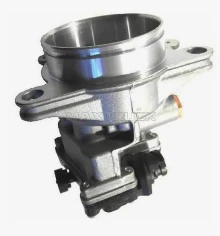
0012608463 corresponds to the Gearbox Actuator or Shifting Cylinder in the Mercedes-Benz system, with WABCO part number 4213520820, an execution component within WABCO's EPS III transmission control product line. Its core function is to receive TCU commands and use pneumatic pressure to drive internal pistons and valve bodies, actuating the gearshift forks to complete gear engagement.
To understand the technical content of this part, one must first understand how an AMT system works. An AMT transmission adds an electro-pneumatic actuation mechanism on top of a conventional manual gearbox's mechanical structure. The TCU determines the optimal shift timing based on vehicle speed, engine RPM, throttle position, and load status, then sends commands to the actuator. The actuator opens and closes pneumatic valves within milliseconds, driving the shift fork to complete gear engagement while feeding position data back to the TCU through a position sensor. The entire process demands extremely high response consistency and positional accuracy from the actuator - any deviation in any link results in shift shock, failed gear engagement, or transmission fault codes.
The commercial value of this part lies in the vehicle population it covers. According to WABCO official catalog data, 4213520820 is primarily applied to Mercedes-Benz Actros MP2, MP3, and Axor models equipped with automated manual transmissions, covering production years 2003 to 2012. These models have a substantial European heavy truck population, with many still in intensive operation, generating sustained and stable replacement demand. For distributors, this means the part is not a one-time demand item but a stocked category with continuous repeat-purchase potential.
From a technical specification standpoint, WABCO 4213520820's key parameters carry clear engineering constraints: maximum operating pressure 10.0 bar, nominal diameter 3.5 mm, 7-pin electrical connection, Voss NG 8 port threads, 24V rated voltage, IP69K protection class, operating temperature range -35°C to +130°C, and weight approximately 1.3 kg. A mismatch in any of these parameters results in shift calibration failure or transmission fault codes. The IP69K rating in particular means the part must withstand high-pressure, high-temperature water washing, placing seal structure and material selection requirements far above those of ordinary pneumatic components.
Why This Category Demands a Dedicated Supplier Evaluation Logic
Gearbox actuator aftermarket demand has a characteristic that distinguishes it from other parts: failure is gradual, but the repair decision is urgent.
Typical actuator failure modes include seal wear causing air pressure leakage, piston sticking causing sluggish shifting, or internal valve contamination causing imprecise actuation. Industry technical documentation indicates that the leading cause of shift cylinder failure is seal and gasket wear, which causes internal leakage and prevents the piston from reaching required pressure. These failures typically progress from initial symptoms to complete failure over time, but fleets and workshops do not wait until the vehicle is completely immobile - replacement is scheduled at the stage of shift delay or intermittent fault codes.
This means distributors face a service-driven category. Workshops need "in stock now, fits correctly, no repeat repair" rather than the lowest quotation. A truck out of service represents hundreds to thousands of euros in lost revenue per day, making lead-time stability commercially more valuable than unit price differences. A supplier that is 5 euros cheaper but requires a two-week wait carries a far higher real cost to a workshop than a supplier that is slightly more expensive but ships same-day.
Actuator sales also carry an easily overlooked "knock-on liability." After actuator replacement, if correct TCU calibration is not performed, or if residual issues remain in the air supply circuit, the new actuator may report fault codes again shortly. Industry repair documentation indicates that failure to perform correct calibration after shift cylinder replacement is a leading cause of repeat repairs. Distributors who simply "ship and forget," without providing customers with calibration guidance, see elevated return rates and customer churn. Conversely, distributors who include concise installation and calibration notes with shipments not only reduce return rates but also reinforce their positioning as a technically capable supplier.
Fitment Verification: The Most Error-Prone Link
The fitment range of 0012608463 is concentrated within the Mercedes-Benz system, but it is not an isolated part number. WABCO official cross-reference data shows this component is associated with Mercedes-Benz 0022609563, while corresponding to WABCO 4213520820. Additionally, WABCO catalog data shows part number 4213520800 being superseded by 4213520820.
This "one physical part, multiple numbering systems" structure presents both opportunity and risk for distributors. The opportunity lies in inventory serving customers across multiple procurement channels - the same stock can satisfy customers quoting Mercedes-Benz numbers and those quoting WABCO numbers. The risk lies in a scenario where quoting a single number without verifying technical consistency across number systems results in "the number matches but the batch does not." Particularly in cross-brand reference scenarios, different brand systems may describe the same physical part with subtle technical specification differences, and if these differences are not verified, they may manifest as abnormal shift logic after installation.
A more insidious risk lies in platform boundaries. Within the WABCO gearbox actuator product line, multiple adjacent part numbers exist, some of which are visually highly similar but correspond to different transmission models or production years. If distributors assume interchangeability based solely on visual similarity, abnormal shift logic after installation is almost inevitable. In practical procurement, distributors should require suppliers to provide a transmission model list and year range for each part number, rather than a vague "compatible models" description.
Core Dimensions for Assessing a Supplier's Manufacturing Capability
The gearbox actuator is a component with relatively high manufacturing consistency requirements. Piston-to-bore clearance, seal temperature and pressure resistance, and valve body response consistency under cycling all directly affect shift quality and service life. These characteristics cannot be guaranteed through "external copying" - they depend on stable control of material formulation, machining precision, and assembly processes.
A practical supplier screening method is to observe the supplier's ability to describe the manufacturing process. A manufacturer with production capability can clearly explain the control logic of key processes: what are the process parameters for piston surface treatment, how does the seal material formulation match temperature range requirements, and what items are included in the valve body post-assembly testing procedure. This information is not marketing language from a product catalog but technical specifications that must be executed in the production environment. A manufacturer that genuinely controls production will have engineering personnel who answer these questions in specific, quantified terms; a trading company, even with access to factory technical documents, can often only repeat parameters without explaining the process logic behind them.
A trading company typically cannot respond directly to such questions and needs to "check with the factory," or can only repeat parameters from product descriptions without explaining their production meaning. This response pattern is amplified when quality fluctuations occur in bulk orders - a manufacturer can directly trace production batches and process parameters, while a trading company generally cannot. When a batch of actuators experiences early-life failure at a customer site, a manufacturer can trace the specific seal batch, assembly shift, and test records to rapidly identify root cause; a trading company can only pass the problem upstream, resulting in long response chains and unclear accountability.
Another dimension worth examining is the supplier's depth of understanding regarding fault diagnosis. After a gearbox actuator fails, the core challenge for workshops is distinguishing between "actuator failure" and "air circuit/electrical/TCU issues." Industry data shows that shift failure causes can include seal wear, air contamination, solenoid valve failure, electrical connection issues, or internal synchronizer wear. If a workshop misdiagnoses the issue as actuator failure and replaces the part, the problem persists - causing customer dissatisfaction and exposing the distributor to unnecessary returns and reputational damage. A truly professional supplier should be able to help distributors' customers make correct judgments at the diagnostic stage, avoiding ineffective part replacement. This technical support capability is a key differentiator between "parts sellers" and "system-knowledgeable" suppliers.
Additionally, a supplier's attitude toward product failure analysis is worth attention. A responsible manufacturer, upon receiving a failed part reported by a customer, typically performs teardown analysis to determine whether the failure cause is material-related, process-related, or usage-related, and feeds the analysis back to the distributor. This closed-loop feedback mechanism not only helps distributors improve customer selection and usage guidance but also drives continuous product optimization by the manufacturer. Trading companies typically lack this failure analysis capability, because failed parts must ultimately be returned to the upstream factory, and information is largely lost in transit.
A Practical Framework for Procurement Decisions
For distributors preparing to stock 0012608463 or the same actuator series, the following framework is more effective than price comparison alone:
First, assess the supplier's ability to describe the manufacturing process. Use "how is production controlled" instead of "do you have stock, what's the price" as the core question. Whether a supplier can clearly explain the technical specifications of key processes directly reflects their proximity to the production environment. It is advisable to include one or two specific questions about production processes in the initial inquiry and observe the quality of the response.
Second, confirm the completeness of fitment data. Require suppliers to provide verifiable cross-reference information, including which OE numbers correspond, which transmission models are covered, the electrical connector type, and whether mounting dimensions match the original. Quotations lacking this information essentially transfer fitment risk to the distributor. For parts like the 0012608463 with multiple adjacent part numbers, confirming technical differences between numbers is especially important.
Third, evaluate samples and small-batch trial installation. Actuator fitment issues often surface only after installation. Before establishing safety stock, use trial quantities to verify installation fit and real-world performance at representative customers. During the trial phase, focus on: whether the mounting flange fits flush, whether the electrical connector engages smoothly, whether shifting is smooth after installation, and whether the TCU can complete calibration normally.
Fourth, incorporate lead-time stability into core evaluation metrics. Actuator failures occur randomly, and distributors cannot precisely predict emergency order timing. Standard replenishment lead times and emergency order responsiveness affect true procurement cost more than unit price differences. It is advisable to clarify standard replenishment cycles and emergency order response mechanisms with suppliers at the outset of the partnership.
Fifth, confirm whether the supplier can provide post-installation technical support. TCU calibration after actuator replacement is a critical step in preventing repeat repairs. If a supplier can provide calibration guidance or a technical Q&A channel, the distributor's after-sales burden decreases significantly. This support capability is particularly valuable for distributors whose customer base consists mainly of small and medium-sized workshops.
About Mide-Diesel
For distributors and workshop chains evaluating supply channels for the 0012608463, Mide-Diesel Technology & Parts Co., Ltd. offers a factory-direct evaluation path.
Founded in 2009 and headquartered in Shanghai, Mide-Diesel specializes in factory-controlled production of European commercial vehicle parts, supplying Mercedes-Benz, Scania, Volvo, DAF, MAN, and IVECO components to customers across 52 countries and regions. In the gearbox actuator category, Mide-Diesel brings capabilities that map directly to the evaluation framework in this guide:
Direct manufacturing control. CNC machining equipment and dedicated testing facilities directly control critical parameters including piston clearance, seal performance, and valve body actuation precision, rather than assembling from multiple third-party factories. This addresses the manufacturing consistency concern raised in Section IV. Key process parameters and test records during production are traceable, providing a foundation for quality stability in bulk orders.
Engineering-level fitment confirmation. For parts like the 0012608463 with precise fitment boundaries, Mide-Diesel provides OE cross-reference data, connector specification confirmation, and technical Q&A support, helping distributors control fitment risk at the quotation stage. For part series with multiple adjacent numbers, Mide-Diesel can explain the technical differences and fitment boundaries between numbers.
Sample validation and trial orders. Sample evaluation before bulk order confirmation is supported, consistent with the "validate first, then scale" procurement rhythm recommended in this guide. Distributors can verify the actuator's installation fit and real-world performance in actual workshop settings before committing to safety stock.
10,000+ SKU inventory of European truck parts. Covering transmission control, clutch actuation, air systems, control units, and emissions systems, enabling distributors to evaluate category consolidation while validating actuator quality. Consolidating gearbox actuators with other related categories under the same supplier reduces multi-supplier management overhead and improves overall procurement bargaining efficiency.


