


Introduction
In the exhaust system of a heavy truck, the muffler heat shield is a component that is easily underestimated but must never be overlooked. Its function is not to participate in combustion or transmission, but to isolate the radiant heat from the muffler and protect adjacent chassis components, wiring harnesses, air lines, and body structures from thermal damage. Once the heat shield fails, heat is conducted directly to surrounding components-at best accelerating the aging of rubber and plastic parts, at worst causing harness melting or fire risk.
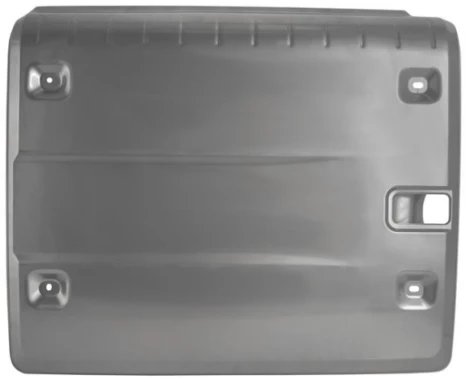
OEM number 21908955 identifies a muffler heat shield that is standard equipment in the exhaust systems of Volvo FH and FM series trucks. According to aftermarket data, the component primarily serves Volvo FH4 (2013 onward) and FM4 platforms, and frequently appears alongside the associated reference 24108635. In the aftermarket, this component circulates predominantly as used salvaged parts, with new aftermarket supply relatively limited-a situation that creates a clear market space for aftermarket suppliers with manufacturing capability.
For aftermarket distributors, import companies, and workshop chains serving Volvo fleets, the 21908955 is a category with genuine demand but limited supply options. This article examines the heat shield from an aftermarket perspective, covering its functional role, application scope, quality differentiation criteria for aftermarket parts, and how distributors can build a supply relationship around this component.
I. Functional Role and Failure Modes of Heat Shields
The core function of a muffler heat shield is thermal isolation. In operation, the muffler surface temperature in a heavy truck's exhaust system can reach several hundred degrees Celsius. The heat shield uses a combination of metal sheet and insulating layer to isolate the radiant heat from the muffler, ensuring that chassis lines, wiring, and body structures remain within safe operating temperatures.
The 21908955 is a formed metal heat shield whose geometry is specifically designed to conform to the muffler profile of Volvo FH/FM trucks. According to aftermarket data, the component is typically manufactured from metal, and some variants may include an insulating liner. Installation typically involves clamps or fasteners, and some aftermarket products may not include fixing hardware, so distributors should clarify product configuration when stocking.
Heat shield failure typically manifests in the following modes:
Corrosion perforation: The heat shield is continuously exposed to road splash, salt, and moisture, and the metal sheet gradually corrodes. Once perforation occurs, radiant heat passes directly through the protective layer, affecting surrounding components. This is the most common failure mode in high-age vehicles.
Mechanical damage: Road debris impact, collision during maintenance operations, or accident damage can cause the shield to deform or tear. Used parts circulating in the aftermarket are frequently marked as "damaged" (mit Schaden), which itself reflects the reality that this component is susceptible to physical damage in service.
Fixation failure: Loose clamps or corroded mounting points can cause the shield to shift or detach. A detached shield not only loses its protective function but may also produce rattling noises or scrape against other components while driving.
Insulation degradation: Some heat shields include an insulating liner. Long-term thermal cycling can cause the insulating material to powderize or detach, reducing thermal isolation effectiveness.
For aftermarket distributors, heat shield replacement demand is driven by two scenarios: replacement after corrosion or damage is identified during vehicle repair or inspection, and replacement after accident damage. The former is relatively dispersed but continuous; the latter is sudden and urgent.
II. Application Scope and Aftermarket Supply Landscape
The application coverage of 21908955 centers on the Volvo FH4 and FM4 platforms. According to cross-referenced aftermarket data, the component serves Volvo FH4 series (2013 onward) and related FM4 models. The associated reference 24108635 appears alongside 21908955 in multiple aftermarket catalogues, possibly indicating a variant within the same component family or a companion reference.
In the aftermarket, the supply landscape for 21908955 has a notable characteristic: used salvaged parts dominate. New aftermarket supply is relatively limited, creating a market opportunity for manufacturers with metal forming and insulation material processing capabilities.
From a distributor's perspective, this supply landscape means two things. First, price stratification is pronounced: used parts are lower-priced but of uncertain condition, while new aftermarket parts are higher-priced but offer quality assurance. Second, supply stability is questionable: distributors relying on salvaged sources face unpredictable inventory, while stable new aftermarket supply requires support from a manufacturing partner.
In terms of cross-references, currently identifiable aftermarket brand alternative numbers for this component are limited. This is consistent with the characteristics of heat shields as relatively low-technical-barrier but highly vehicle-specific components-manufacturers typically prioritize high-turnover mechanical and electrical parts, and aftermarket development for heat shields lags behind. This very situation creates differentiation space for aftermarket manufacturers willing to invest in this category.
III. Quality Differentiation Criteria for Aftermarket Heat Shields
Heat shields may appear simple, but quality differences between aftermarket parts directly affect protective effectiveness and service life. When evaluating supply sources, distributors should focus on the following technical dimensions.
Material thickness and substrate: The metal sheet thickness of a heat shield directly affects corrosion resistance and mechanical damage resistance. Sheets that are too thin deform easily under debris impact and corrode through faster. Quality aftermarket parts should use galvanized or aluminized steel comparable to OE specification, with significantly better salt-spray corrosion resistance than ordinary cold-rolled sheet.
Geometric precision and fitment: The heat shield must precisely conform to the muffler profile. A poorly fitting shield creates an air gap between the shield and muffler, affecting thermal conduction efficiency and producing vibration noise while driving. Some low-cost aftermarket products use simplified forming processes, resulting in shields that do not fully conform to the original contour after installation.
Insulation layer quality (if included): Some heat shields include an insulating liner. The temperature rating and attachment method of the insulating material determine its stability under long-term thermal cycling. Low-quality insulation may powderize and detach within months, degrading the shield to a simple metal deflector and substantially reducing thermal isolation.
Mounting point strength: The shield's mounting holes and clamp fixation points must withstand vibration and thermal cycling. Material reinforcement and edge treatment around mounting points affect tear resistance. Aftermarket parts differ significantly in how these details are handled.
Batch consistency: For distributors, batch consistency means shields from different production runs maintain consistent dimensions and material performance. Reliable aftermarket manufacturers should provide batch traceability records and have corrective capability when quality issues arise.
In the aftermarket, quality assurance for heat shields comes primarily from the manufacturer's warranty policy and traceability. Because this category currently lacks broad branded aftermarket supply, distributors should focus more on the manufacturer's production capability and quality system rather than comparing quotations alone.
IV. Positioning This Component for Aftermarket Distributors
For distributors building or expanding a Volvo exhaust system aftermarket product line, the 21908955 has several clear positioning characteristics.
Genuine demand but limited supply options: Heat shield replacement demand is driven by corrosion, damage, and accident repair-genuine needs in Volvo FH/FM fleet aftermarket service. However, the current market is dominated by used salvaged parts, with limited new aftermarket supply channels. Distributors who can provide stable new aftermarket parts have a clear differentiation advantage in this category.
Synergy with exhaust system category: Heat shields can form a product combination with mufflers, exhaust pipes, clamps, and seals, offering workshops a one-stop solution for exhaust system repair. This category strategy creates more customer stickiness than single-SKU sales and better demonstrates the distributor's depth of understanding of Volvo exhaust systems.
Urgency-driven sales: When a workshop identifies heat shield corrosion perforation or accident damage, the vehicle is typically in repair status and needs to be delivered as soon as possible. Distributors who maintain inventory have a structural advantage in these sales, and the uncertainty of salvaged sources highlights the value of stable supply.
Technical support as a differentiator: Heat shield installation involves fixing hardware selection and fitment confirmation. Distributors who can provide installation precautions, fixing hardware recommendations, and fitment confirmation build technical value with workshop customers that goes beyond price competition.
V. Partnering with Mide-Diesel for Aftermarket Heat Shield Supply
For distributors and import companies seeking a factory-direct aftermarket supply of heat shields and related exhaust system components, Mide-Diesel Technology & Parts Co., Ltd. offers a manufacturing partnership built on production capability and aftermarket focus.
Founded in 2009 and headquartered in Shanghai, Mide-Diesel has developed multi-category manufacturing capabilities across the European heavy truck aftermarket parts sector, supplying distributors and workshop customers in more than fifty countries and regions. The company's product range encompasses aftermarket components for multiple Volvo truck systems, with metal forming and surface treatment capabilities enabling the supply of heat shields compatible with Volvo FH/FM platforms.
On the production side, Mide-Diesel follows full-process quality control from raw material inspection through finished product functional verification. Heat shield products undergo dimensional precision, material thickness, and surface treatment checks before shipment, ensuring batch consistency meets professional aftermarket requirements.
For distributors seeking to move from sporadic purchasing to scalable wholesale relationships, Mide-Diesel provides bulk inventory support, enabling partners to build their own branded exhaust system component lines. A dedicated after-sales technical support team assists with fitment inquiries and application confirmation.
Distributors already sourcing other Volvo aftermarket categories from Mide-Diesel-including transmission control components, cooling system parts, or engine electrical components-can typically incorporate heat shields into their existing supply relationship without the overhead of qualifying an entirely new supplier.
Conclusion
The muffler heat shield (OEM 21908955) is a functionally critical but supply-limited component in the exhaust systems of Volvo FH4/FM4 trucks. Its demand is genuine and replacement is urgent, while the current market is dominated by used salvaged parts of uncertain condition, with stable new aftermarket supply channels relatively scarce. For aftermarket distributors serving Volvo fleets, this category is both a challenge and an opportunity-distributors who can provide consistently quality, accurately fitting new aftermarket parts will build a reputation for reliable supply among workshop customers.
In the aftermarket context, success depends not on chasing the lowest price or relying on salvaged sources, but on identifying manufacturing partners who can provide consistent quality, reliable delivery, and clear warranty coverage. Building an exhaust system product line around a verified aftermarket supplier is the practical path to earning long-term workshop trust.
Contact Mide-Diesel with your target part numbers or OE references for wholesale quotation and fitment verification on the 21908955 heat shield or other Volvo exhaust system components.


