Hey there! I'm an electrical supplier, and I'm super pumped to deep-dive into how semiconductors are used in electrical devices. Semiconductors are like the unsung heroes of the electrical world, quietly making all our gadgets and gizmos work.
Let's start with the basics. What exactly is a semiconductor? Well, it's a material that has electrical conductivity between that of a conductor (like copper) and an insulator (like rubber). This unique property makes semiconductors incredibly versatile and useful in a whole bunch of electrical applications.


One of the most common uses of semiconductors is in diodes. Diodes are like one-way streets for electricity. They allow current to flow in one direction but block it in the other. This simple yet powerful function has a ton of practical applications. For example, in power supplies, diodes are used to convert alternating current (AC) into direct current (DC). Most of our electronic devices run on DC, so without diodes, we wouldn't be able to power them using the AC electricity from our wall sockets.
Another crucial semiconductor component is the transistor. Transistors are the building blocks of modern electronics. They can act as switches or amplifiers. As switches, they can turn electrical circuits on and off very quickly, which is essential for digital devices like computers and smartphones. In fact, every time you click a button on your phone or type on your keyboard, millions of transistors are switching on and off to process your input. As amplifiers, transistors can boost weak electrical signals, which is important in things like audio systems. When you listen to music through your speakers, the transistors in the amplifier are making the tiny electrical signals from your music source loud enough to drive the speakers.
Now, let's talk about how semiconductors are used in some specific electrical devices. Take smartphones, for instance. Smartphones are basically mini-computers that we carry around in our pockets. They have a whole bunch of semiconductor components working together to make them function. The central processing unit (CPU), which is the brain of the phone, is made up of billions of transistors. These transistors perform all the calculations and data processing that allow you to run apps, browse the web, and take photos. The memory chips in your phone, such as RAM (Random Access Memory) and ROM (Read-Only Memory), also use semiconductors. RAM stores the data that your phone is currently using, while ROM stores the permanent data like the operating system and apps.
Another example is LED (Light-Emitting Diode) lights. LEDs are a type of semiconductor device that emits light when an electric current passes through it. They are much more energy-efficient than traditional incandescent bulbs and last much longer. LEDs are used in all sorts of lighting applications, from household lights to car headlights.
As an electrical supplier, I deal with a wide range of semiconductor-based products. For example, we have the SCANIA 2569026 Panel Switch, which is a high-quality switch that likely uses semiconductor technology to ensure reliable performance. It's designed for use in various electrical systems and can handle different levels of current and voltage.
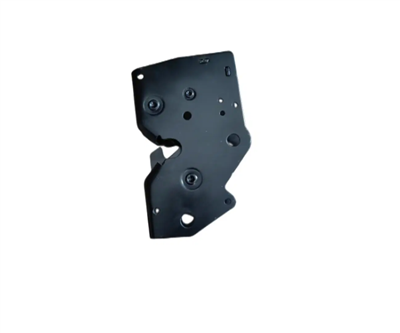
We also offer the SCANIA 2558585 2673062 2892694 2892594. These components are used in specific electrical setups and are known for their durability and efficiency. They might be used in automotive electrical systems or industrial control panels, where semiconductors play a key role in regulating the flow of electricity and controlling various functions.
And then there's the SCANIA 1435679 2388630. These parts are essential for maintaining the proper functioning of electrical circuits. They could be used in power distribution systems or in devices that require precise control of electrical signals.
In the automotive industry, semiconductors are becoming increasingly important. Modern cars are filled with electronic systems that rely on semiconductors to function. For example, the engine control unit (ECU) uses semiconductors to monitor and control the engine's performance. It adjusts things like the fuel injection, ignition timing, and air intake to optimize the engine's efficiency and power output. The safety systems in cars, such as anti-lock braking systems (ABS) and airbag control units, also use semiconductors. These systems need to be able to react quickly to changes in the vehicle's conditions, and semiconductors allow them to do so.
In the industrial sector, semiconductors are used in automation and control systems. Programmable logic controllers (PLCs) are widely used in factories to control machinery and processes. These PLCs are based on semiconductor technology and can be programmed to perform a wide range of tasks. For example, they can control the speed of conveyor belts, turn on and off motors, and monitor the temperature and pressure in industrial processes.
Renewable energy systems also rely heavily on semiconductors. Solar panels, for example, use semiconductor materials like silicon to convert sunlight into electricity. The photovoltaic cells in solar panels are made up of layers of semiconductors that generate an electric current when exposed to light. In wind turbines, semiconductors are used in the power conversion systems to convert the variable frequency and voltage of the generated electricity into a stable form that can be fed into the grid.
So, as you can see, semiconductors are everywhere in the world of electrical devices. They are essential for making our modern technology work, from the smallest gadgets to the largest industrial systems.
If you're in the market for high-quality electrical components, especially those based on semiconductor technology, I'd love to have a chat with you. Whether you need parts for a small DIY project or a large-scale industrial installation, we've got you covered. Just reach out, and we can start discussing your specific needs and find the right solutions for you.
References
- "Introduction to Semiconductor Devices" by Donald A. Neamen
- "Electronic Devices and Circuit Theory" by Robert L. Boylestad and Louis Nashelsky
- Various product manuals and technical documentation from semiconductor manufacturers.