


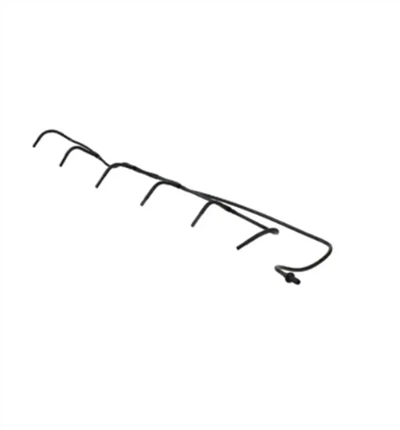
SCANIA 2034621 Ad Blue Urea Nozzle Dosing Module
Ad Blue Urea Nozzle Dosing Module
OE number:1768270 1368270 2034621,1768270,1368270,1793875,1361651,1390932,1617096,1892482, 1817808,1892492,23705
Applicate:Scania P G R T-Series
Exhaust gas and SCR catalyst temperature is another important parameter that affects the operation of the SCR system. Since the catalytic conversion of nitrogen oxides decreases with decreasing temperature, the urea dosage must be reduced accordingly to prevent the emission of ammonia and other urea decomposition products. In addition to catalyst activity, another low temperature limitation for urea injection is related to system fouling caused by solid urea crystallization and byproducts of incomplete urea decomposition. In systems using high and low temperature activity catalysts, the low temperature limit for urea dosage is usually set based on fouling considerations rather than catalyst activity. SCANIA 2034621 Ad Blue Urea Nozzle Dosing Module The low temperature cut-off point for injection is usually in the range of 200-250°C. While this is sufficient to meet the nitrogen oxide emission limits for most regulatory test cycles, off-cycle emissions (such as during low-speed city driving) create pressure to inject urea at lower temperatures. In a well-designed system, urea injection can be carried out at temperatures as low as about 180°C. However, even if complete urea decomposition is ensured, prolonged SCR operation at low temperatures may lead to the accumulation of other solid deposits, such as ammonium nitrate and/or ammonium sulfate.
Cold temperature properties of urea solutions also need to be addressed in commercial SCR systems. Since the 32.5% urea solution used in SCR systems has a freezing temperature of -11°C-which is not acceptable for colder climates-the storage tanks, tubing, pumps, etc., need to be heated. When the vehicle is shut down, the dosing system components must be protected from damage due to ice expansion, either by purging from urea solution or through freeze proof design.
Future Trends. Urea-SCR technology is increasingly used in diesel engine applications, driven by the engine efficiency and fuel economy demands. The increasing NOx conversion efficiency of SCR systems may eventually enable the elimination of engine-based NOx control strategies-for example EGR-providing more flexibility in optimizing the engine for performance and fuel economy. The development trends in urea dosing systems include:
Increasing NOx conversion efficiency:
Low temperature performance to meet the anticipated US/California low NOx (0.02 g/bhp-hr) emission standards
Model-based control strategies that account for ammonia storage
Higher urea dosing rates and larger urea tanks
Close-coupled SCR installation (including SCR-on-DPF):
Size reduction and simplification of the dosing system
Better urea atomization, smaller droplet diameter and mixing path reduction
Reduction of system complexity:
Airless dosing systems.
Freeze proof design, with no purging requirements
Increased robustness, durability and high temperature tolerance
Cost reduction
Hot Tags: scania 2034621 ad blue urea nozzle dosing module, China scania 2034621 ad blue urea nozzle dosing module manufacturers, suppliers, factory
You Might Also Like


Send Inquiry